


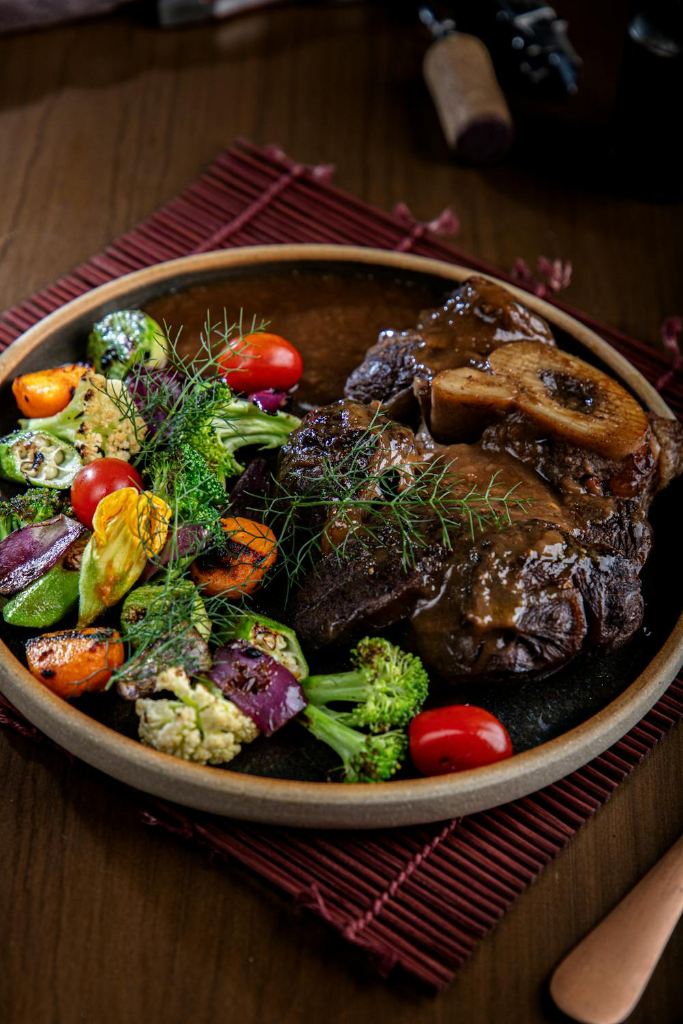
The Butcher's Guide — Cut #1: Beef Hind Shank
Every week we're breaking down one cut of beef — where it lives on the animal, why it cooks the way it does, and exactly how to get the best out of it at home. We're starting from the bottom and working our way up. Literally.
📍 Where It Is on the Animal
The hind shank is the lower portion of the back leg — from the knee joint down to just above the hoof. Picture the animal standing. That thick, cylindrical chunk of muscle and bone right above the back foot? That's your shank.
When it's cross-cut through the bone into thick rounds, those rounds are what Italians call Osso Bucco — which literally translates to "bone with a hole." That hole is the marrow canal running through the center of the bone, and it's one of the best things you can eat.
💪 Why It's Tough — And Why That's a Good Thing
The shank is one of the hardest working muscles on the animal. Every step the cow takes, that leg is carrying the full weight of the animal. That constant work builds up dense connective tissue and collagen throughout the muscle.
Collagen is what makes a shank tough when you cook it fast — but when you cook it low and slow, that collagen breaks down and converts into gelatin. That gelatin is what gives a braised shank that rich, silky, lip-coating sauce. You can't fake it. No other cut does it quite like this one.
The bone marrow in the center adds another layer — as it heats up it melts into the braising liquid, adding fat and richness that rounds out the whole dish.
🔪 How to Break It Down
A full hind shank comes off the carcass as a whole leg section. At the butcher counter you'll typically see it already cross-cut into rounds about 1.5 to 2 inches thick — that's your Osso Bucco cut. Ask your butcher to cut them thick. Thin shanks dry out before the collagen has time to break down.
🍳 Ways to Cook It
The hind shank needs time and moisture. There's no shortcut here — and you don't want one.
1. Classic Braised Osso Bucco
Season the rounds heavily, sear hard on both sides in a heavy pan until deeply browned — don't skip this step, that crust is flavor. Remove and build your braise: onion, carrot, celery, garlic, tomato paste, white wine, beef stock. Nestle the shanks back in, bone standing upright, liquid coming halfway up the sides. Cover and cook at 325°F for 2.5 to 3 hours until the meat is pulling away from the bone and a knife goes in with zero resistance. Finish with gremolata — fresh parsley, lemon zest, garlic — stirred in right at the end.
2. Slow Cooker Shank
Same principle, different tool. Sear the shanks first — always sear first — then transfer to the slow cooker with your aromatics and liquid. Low for 8 hours or high for 5. The result is fall-off-the-bone tender with a rich braising liquid that you reduce on the stovetop into a proper sauce.
3. Smoked Then Braised
This one is for the backyard crowd. Smoke the whole shank rounds at 250°F over oak or hickory for 2 hours to build a bark and get smoke penetration into the meat. Then transfer into a covered roasting pan with beef stock and aromatics and finish in the oven at 300°F for another 2 to 2.5 hours. You get the smoke flavor layered into that deep braised richness. It's a different animal entirely.
4. The Marrow Bonus
Don't waste the marrow. After braising, scoop it out of the bone with a small spoon and spread it directly on toasted crusty bread. Hit it with flaky salt and a squeeze of lemon. That's it. It's one of the best bites in all of beef cookery.
🛒 What to Look For
Look for shanks with the bone intact and the marrow visible in the cross-section — that white or yellowish center is what you want. Thicker cuts (1.5–2 inches) will hold together better through a long braise. Avoid anything pre-cut too thin or with the marrow already pushed out.
Next week we're moving up the leg — stay tuned. Published every Monday by The Butcher's Journal.